

Last Updated: November 15, 2026
Quick Summary
To maintain graphic tee quality, turn the shirt inside out and wash it cold on a gentle cycle with mild detergent and no bleach, keeping it away from jeans and towels. Air-dry it flat or on a line, since heat and friction are what crack a print.
- Powder detergent leaves grit that rubs the print, so choose a mild liquid formula.
- Avoid chlorine bleach and enzyme bleach alternatives, fabric softener, hot water, and overloading the machine.
- Store graphic tees folded print-side up in a dry drawer away from direct sun.
- Never hang tees on wire hangers or stack heavy items on the print.
- Machine drying on high heat is what kills tees early.
Table of Contents
- How to Wash Graphic Tees Without Cracking the Print
- Best Detergent for Graphic Tees and What to Avoid
- How to Store Graphic Tees to Prevent Damage
- Frequently Asked Questions
How to Wash Graphic Tees Without Cracking the Print
Learning how to maintain graphic tee quality starts with one rule: treat the print like a delicate layer, not part of the fabric. Turn the shirt inside out, wash cold on a gentle cycle with mild detergent and no bleach, keep it away from jeans and towels, and air-dry flat or on a line. Heat and friction crack a print, so keep both away and the design lasts.
Here is the wash routine that keeps a print from cracking.
| Step | What to do |
|---|---|
| Prep | Turn the shirt inside out |
| Wash | Cold water, gentle cycle, mild detergent |
| Avoid | No bleach; keep away from jeans and towels |
| Dry | Air-dry flat or on a line |
| Heat and friction | Keep both away from the print |
Best Detergent for Graphic Tees and What to Avoid
The best detergent for graphic tees is a mild, liquid formula with no bleach and no harsh stain fighters. Powder leaves grit that rubs the print; bleach breaks down ink fast. Avoid chlorine bleach and enzyme bleach alternatives, fabric softener, hot water, and overloading the machine. If you are weighing whether a better-made shirt is worth careful washing, read our take on whether high quality fishing shirts for men are worth it.
How to Store Graphic Tees to Prevent Damage
Store graphic tees folded, print-side up, in a dry drawer away from direct sun. Never hang them on wire hangers or stack heavy items on the print. Fold along the seams, not across the design, keep shirts out of damp garages and basements, rotate your tees, and store long-term shirts in a breathable cotton bag. For more on wearing and rotating your tees, see how to style fly fishing apparel on and off the water.
Machine drying on high heat is what kills them early. If you want tees worth the extra care, browse our fly fishing tees inspired by classic patterns like the Woolly Bugger and Parachute Adams. Our Fellow Fishers Wildlife Tee is a 100% cotton unisex classic tee with taped neck and shoulders.
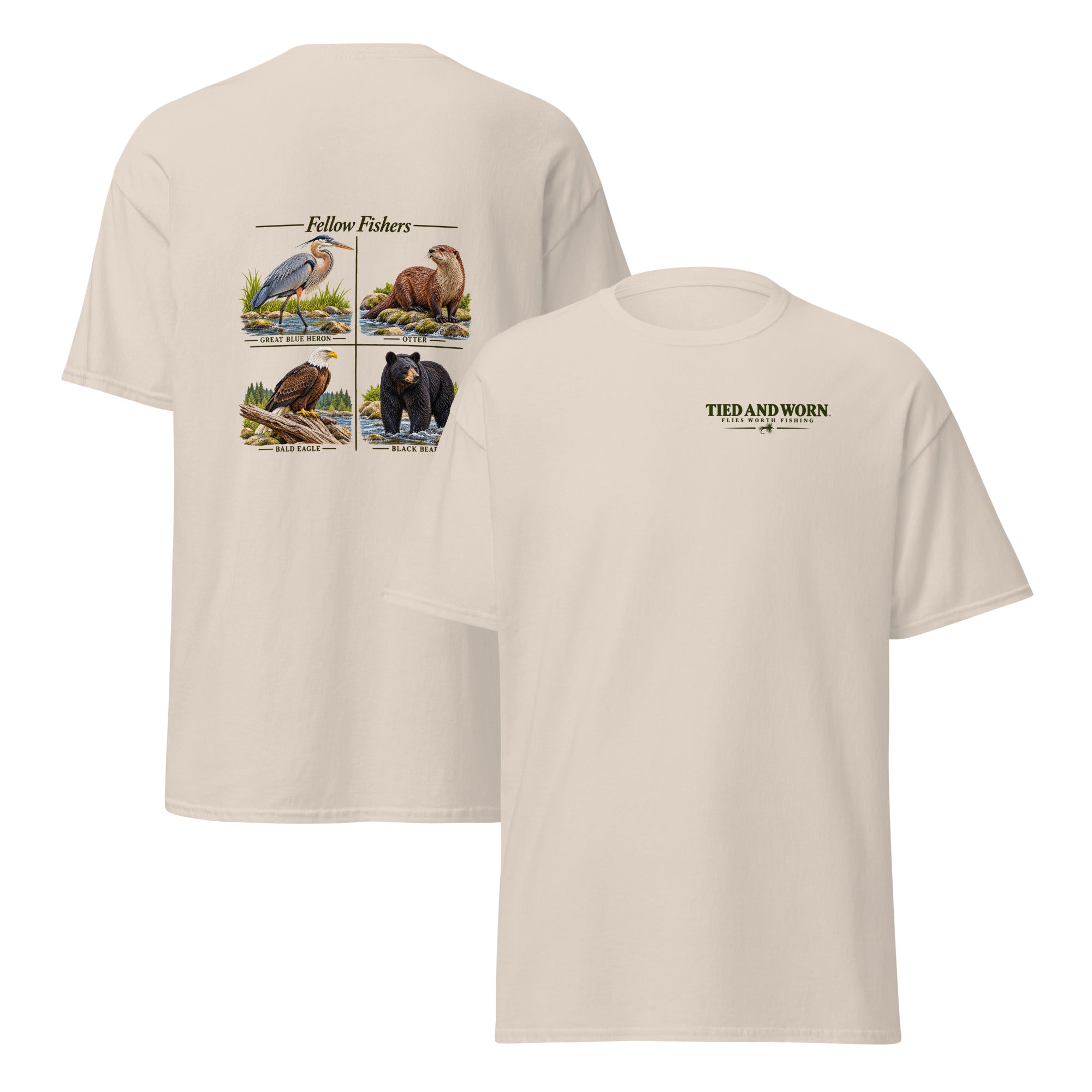
Caring for a printed shirt takes five extra minutes, and it keeps the design you love looking new. Tied and Worn builds apparel for anglers who want to wear the patterns they fish. Our tees feature designs drawn from classic flies, made from soft cotton with a classic unisex fit. Get started with Tied and Worn and wear your favorite patterns for years to come.
Frequently Asked Questions
What is the best way to preserve graphic tees?
Turn the tee inside out, wash in cold water on a gentle cycle with mild detergent, and air-dry it. Avoid bleach, fabric softener, and high heat. Store folded rather than hung to prevent stretching.
Is it better to wash graphic tees inside out?
Yes, washing inside out reduces friction against the print. The ink sits on the outside of the fabric, so turning the shirt inside out protects it from rubbing against other garments and the washing machine drum. This simple step helps prevent cracking and peeling, especially on printed shirts with large designs.
Can you fix a peeling print on a shirt?
Small peeling edges can sometimes be pressed back with a warm iron (no steam) using a pressing cloth over the print, or with a heat press. However, once a print is cracked or flaking badly, it cannot be fully restored. Prevention through proper washing and drying is the best strategy to maintain print adhesion.
